Many landing pages underperform because they mix too many goals in one experience. A page that asks visitors to understand everything at once usually converts less efficiently than a page with one clear promise and one clear action.
Clarify the page job before design decisions
Every landing page should answer one question first: what action should this visitor take now? If the action is unclear, design and copy decisions become inconsistent and hard to test.
Define the page job in one sentence and use it as a filter for every element on the page.
Strengthen message match from ad to page
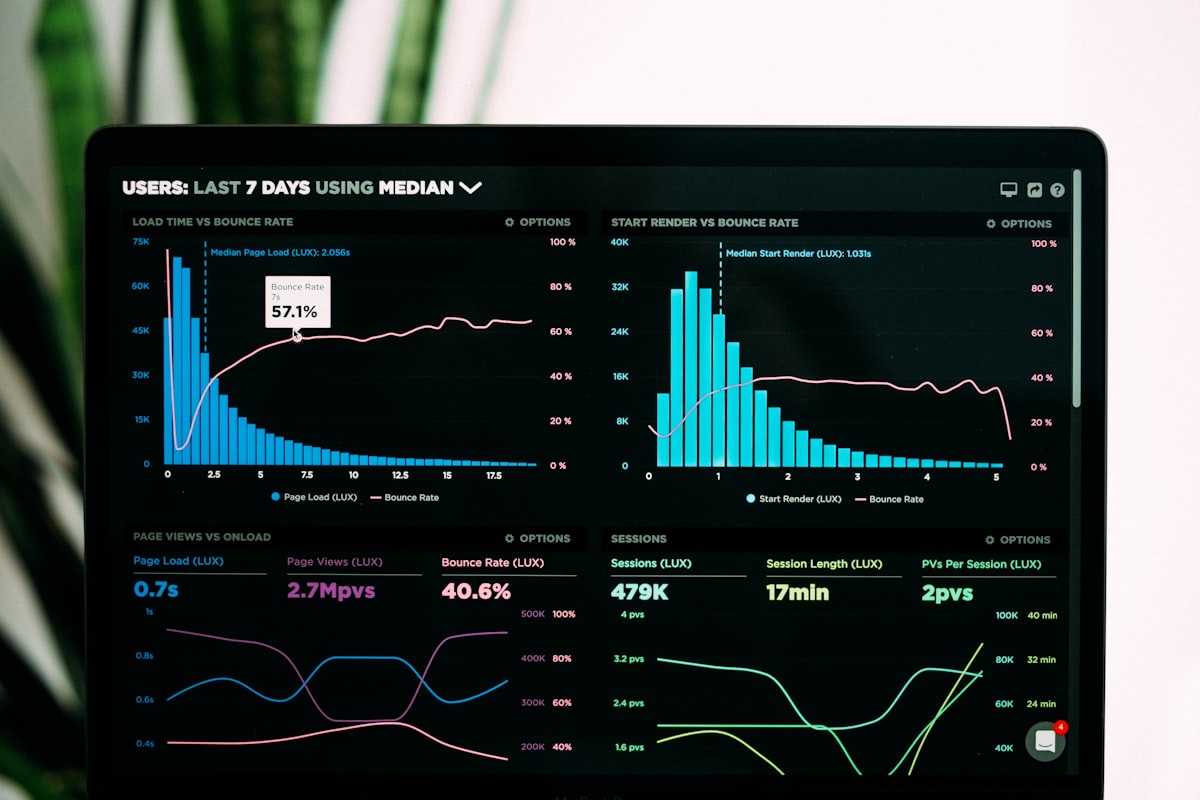
When headline language and offer framing match the incoming ad or campaign context, users orient faster and trust rises. Message mismatch increases bounce risk and weakens conversion intent.
Start by aligning headline, proof point, and CTA language to the source campaign promise.
Use evidence before the primary CTA
Visitors often need a short trust bridge before committing. Place concise proof near the top of the page: customer outcomes, implementation clarity, or transparent process details.
The objective is to reduce perceived risk before asking for commitment.
Reduce conversion friction deliberately
Shorter forms, clear field labels, and direct copy usually improve completion quality. Ask only for information needed at this step. Additional qualification can happen after the initial conversion event.
Friction removal should be intentional, not generic. Keep only what protects lead quality or operational feasibility.
Treat mobile readability as a baseline requirement
Mobile visitors should be able to scan, understand, and act without pinching, zooming, or decoding dense layouts. Prioritize visual hierarchy, button clarity, and page speed on the templates that drive most traffic.
Mobile quality is not a secondary adaptation. It is a primary conversion requirement.
Run a focused testing rhythm
Start with high-impact hypotheses: value proposition clarity, CTA framing, and trust signal placement. Avoid low-value tests until core message clarity is strong.
A weekly experimentation cadence with documented outcomes builds a compounding advantage over time.
Design offer architecture before page layout
High-converting pages usually present one primary offer, one secondary option, and one low-commitment path for early-stage visitors. Define that structure first, then design the page around it. This improves clarity and prevents CTA competition.
Offer architecture also improves experiment quality because each test compares meaningful strategic choices instead of random visual variations.
Use qualification by context, not by long forms
Long forms are often used as a proxy for quality filtering, but they can suppress qualified demand. A better approach is contextual qualification: ask fewer fields initially, then use progressive follow-up questions based on visitor intent and company fit.
This method preserves conversion volume while maintaining lead quality standards for downstream teams.
Create a conversion handshake with sales
Landing-page optimization should not stop at form submission. Align with sales on lead qualification signals, handoff timing, and follow-up standards. Feed close-rate and objection data back into page messaging so each revision improves both conversion rate and revenue quality.
This closed loop helps pages attract the right opportunities, not only more submissions.
Frequently asked questions
Sources
- Web Vitals
web.dev / Accessed Feb 15, 2026
- Understanding page experience in Google Search results
Google Search Central / Accessed Feb 15, 2026
- Creating helpful, reliable, people-first content
Google Search Central / Accessed Feb 15, 2026